What are Coincidence & Synchronisation Systems?
Coincidence detection and precision time synchronisation are the backbone of multi-photon quantum experiments — enabling correlated photon pair measurement, entanglement verification, and distributed quantum network coordination with sub-nanosecond accuracy.
Detecting Quantum Correlations with Precision Timing
Quantum optical experiments fundamentally depend on the ability to detect and correlate photon arrival events across multiple detectors with extreme temporal resolution. A coincidence counter identifies when two or more photons arrive within a defined time window — an essential measurement for proving entanglement, verifying QKD sources, and studying multi-photon interference.
At the heart of every Bell test, Hong-Ou-Mandel experiment, or entanglement swapping protocol is a Coincidence Counting Unit (CCU) — a high-speed logic system that compares time-stamped detector pulses and records coincident detection events. The resolution of this system directly limits the signal-to-noise ratio of the entanglement measurement.
Equally critical in distributed quantum networks is Precision Time Protocol (PTP) synchronisation — ensuring that geographically separated nodes share a common time reference with sub-microsecond (and sub-nanosecond) accuracy, enabling coherent quantum state manipulation across network links.
8-Fold Coincidence Detection
Arquis CCU supports up to 8-channel inputs with configurable coincidence folding, enabling complex multi-photon correlation measurements in a single unit.
Fine Timing Windows
Configurable coincidence time windows down to 2.5 ns suppress accidental coincidences while preserving true correlated events from entangled photon pairs.
PTP IEEE 1588 Compliant
Hardware-timestamped PTP synchronisation locks distributed quantum network nodes to a shared time reference, enabling coherent multi-node quantum operations.
Essential Questions About Coincidence & Sync Systems
Technical answers on how coincidence counting and precision synchronisation work in quantum optical systems.
Arquis Coincidence & Synchronisation Products
Precision quantum timing and detection systems from Arquis for your laboratory and quantum network deployments.
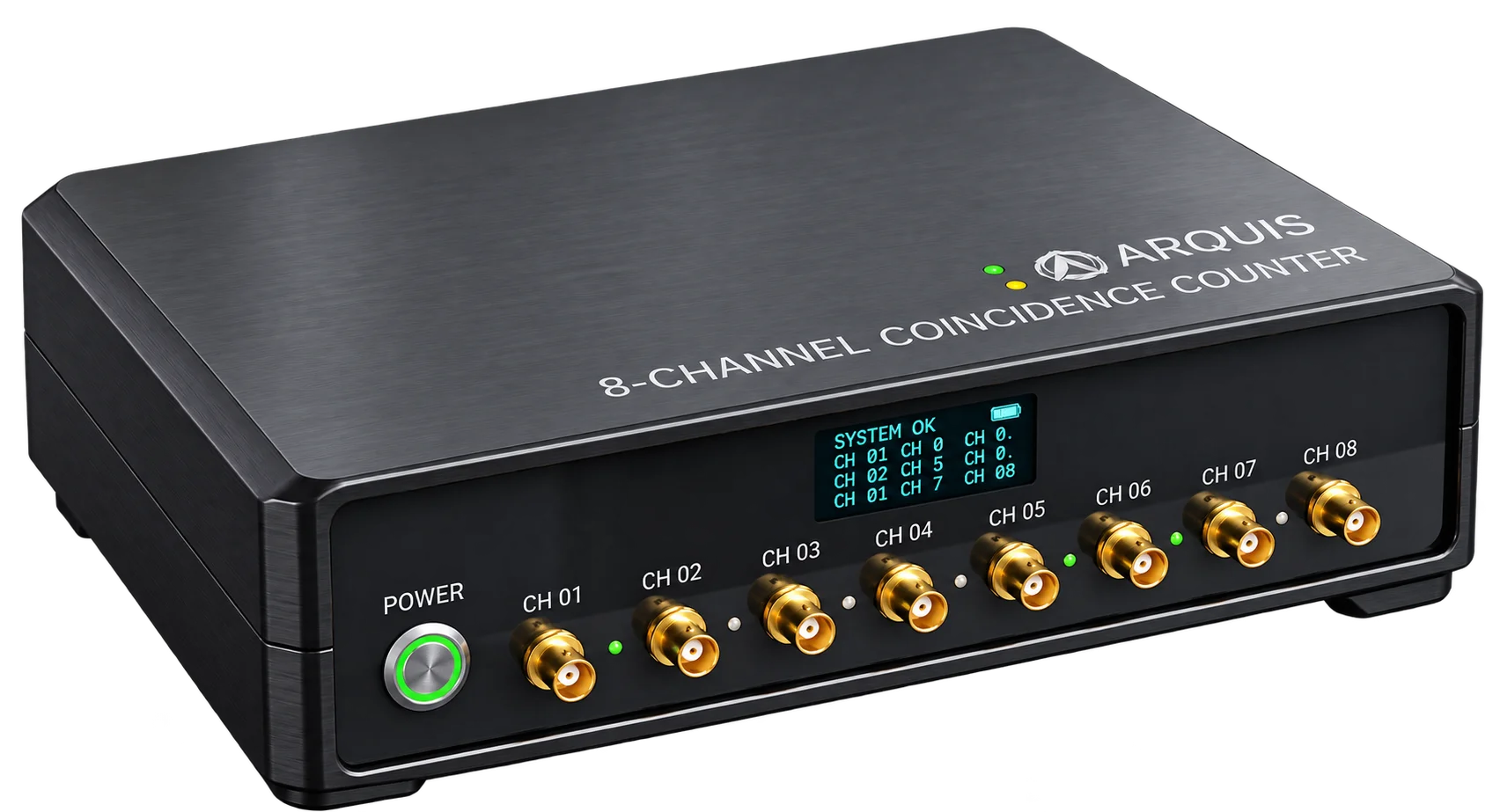
Multi-channel Coincidence System
Inhouse 8-Channel CCU with up to 8-fold coincidence folding, 2.5 ns timing resolution, and real-time configurable coincidence logic for quantum optics experiments.
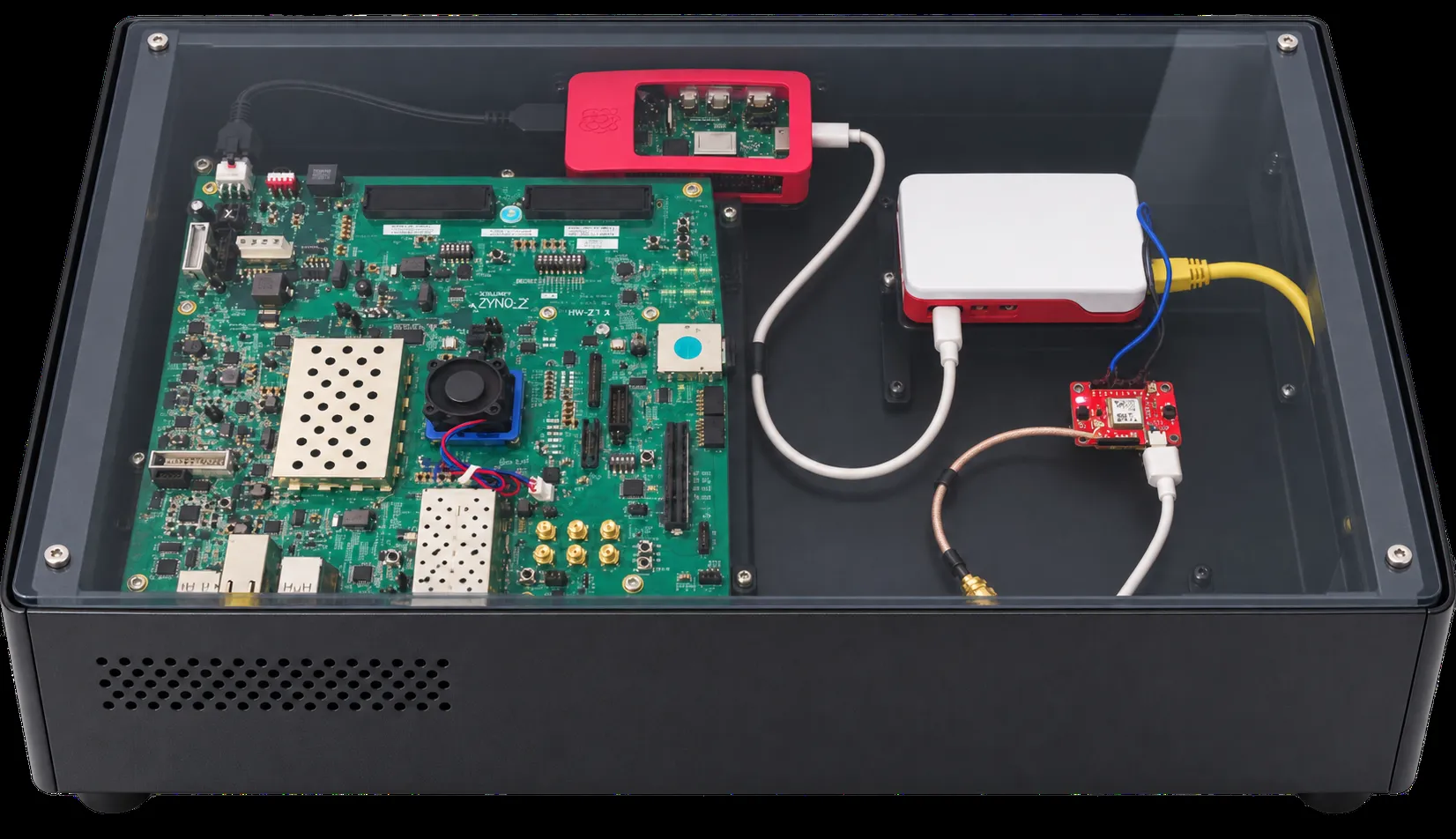
PTP Synchronisation (TRL-3)
Precision Time Protocol based time synchronisation for distributed quantum networks, providing IEEE 1588 hardware-timestamped sub-microsecond clock alignment across network nodes.